
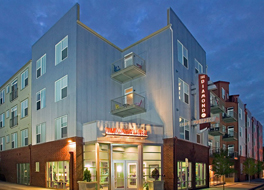
From his downtown Seattle office, Stephen Whyte runs 93 low-income housing complexes across the nation.
Whyte should be a key player in solving what Seattle Mayor Ed Murray calls “our worst housing affordability crisis in decades.”
He’s not.
All of Whyte’s expertise at tapping tax credits and taming costs melts away in the blistering-hot Seattle property market. Of the eight projects his company, Vitus, bought and rehabbed last year, none was in Washington state.
“Seattle is an ultra-expensive market right now,” Whyte said. “It’s very difficult to find (low-income) projects that work.”
Time spent with people like Whyte — the experts who actually create and manage housing for people with modest incomes — shows that overwhelming economic forces are conspiring to sweep aside the mayor’s dream of building a city affordable to all of its workers.
According to Zillow, the Seattle median home value of $507,600 is projected to rise 7.3 percent in the next year. The median rent is $1,825.
Even if all 65 recommendations of Murray’s affordable housing task force were put into action — including the upzones, developer fees and doubling the housing levy to $290 million — it likely would only marginally boost the supply of affordable dwellings to the people who brew Seattle’s lattes, tend its sick and clean its offices.
“Unfortunately in Seattle, that’s where (doing affordable housing) gets very difficult,” said Bryon Gongaware, managing director of the affordable housing division at Security Properties, another Seattle developer that finds itself stymied in its home town.
Bellevue-based DevCo, yet another low-income developer, is building 516 units in Federal Way and will break ground soon on a 261-unit property in Kent.
But DevCo hasn’t built in Seattle.
It can’t compete against the market-rate builders paying top dollar for development sites, said company President Jack Hunden.
Security Properties, like Vitus and DevCo, makes money by building and operating low-income units — about 7,400 such units around the nation.
But what does today’s economic reality enable Security to do in Seattle? It’s building a 40-story luxury tower with a rooftop pool.
Competition at bay
Some people might be surprised at one thing that Vitus, Security Properties and DevCo have in common beyond their low-income housing portfolios: they make money on them.
While most people associate affordable housing with nonprofit organizations, such as Capitol Hill Housing and Bellwether Housing, the industry also includes plenty of for-profit companies. In fact, the for-profits and nonprofits often team up on projects.
Together, they amount to a $2.6 billion-a-year industry in King County, employing 14,600 people directly and indirectly.
It’s a complex, regulation-driven business, but not as risky as that sounds because demand for affordable housing is insatiable, said Tim Overland, president of Security Properties.
And surprisingly, he added, the return on investment can be higher than on market-rate deals.
Given that potential, why aren’t more private companies building affordable housing?
“It’s complicated, it’s niche-y — and most institutional capital partners don’t get it and aren’t interested in buying it,” said Overland. Of Security’s 15,400 total apartments, just under half are in its affordable-housing portfolio.
This hybrid approach is intentional, with the affordable-housing business serving as a counterbalance to buying and building market-rate housing. Market housing tends to be more cyclical and volatile, Overland said, “whereas affordable housing is very stable from a cash-flow perspective.”
Building and managing affordable housing isn’t without risk. Like a conventional apartment project, affordable ones have to be built on time and on budget. The properties must be managed so employees and investors can be paid.
And the developer has to comply with myriad regulations. Failure could result in the government taking back tax credits that were used to fund the project, and the developer would be on the hook for that plus interest and penalties.
This can be scary. But for a company like Security, which has a team dedicated to compliance issues, it’s a good thing, said Gongaware.
“I like that scary factor,” he said, “because it reduces the buyer pool and allows us to be more competitive for (affordable housing) transactions.”
Where the jobs are
At Vitus, Whyte looks north from his downtown office window and sees a forest of buildings rising up for the ever-expanding Amazon.com.
He’s looking at the challenge. Amazon is a Pied Piper for 24,000 highly paid employees in Seattle, people whose ability to pay for close-in homes and apartments has helped drive Seattle prices up 11 percent in the past year, according to Zillow.
Affordable housing developers like Vitus are caught between powerful forces that limit their ability to turn on the spigot of supply just because politicians like Murray say it’s needed.
Thirteen years ago, Vitus bought a 332-unit low-income property in White Center. Whyte doesn’t think he could do that today because the real estate market “is so overheated now.”
Vitus does have 33 properties in Washington, but most are in rural areas, such as Darrington in Snohomish County and Toppenish in Yakima County.
The experiences of developers like Vitus, DevCo and Security show why significantly expanding the supply of low-priced dwellings in a superheated real-estate market may turn out to be mission impossible.
